

For years, investors, analysts, and technology professionals used the term “FAANG” to describe the companies driving innovation, market growth, and investor attention. Facebook (now Meta), Amazon, Apple, Netflix, and Google dominated headlines, stock market discussions, and technology trends.
In 2026, a new acronym has emerged: MANGOS.
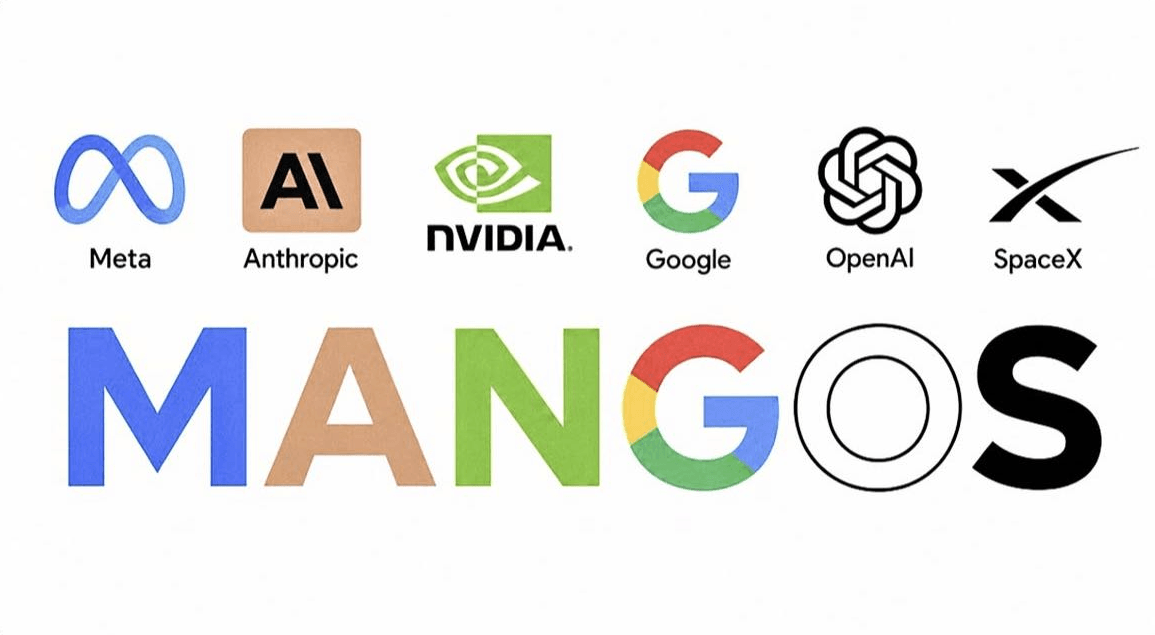
MANGOS stands for:
- Meta
- Anthropic
- NVIDIA
- OpenAI
- SpaceX
The term reflects a major shift in technology leadership. Instead of social media, e-commerce, streaming, and mobile devices defining the future, artificial intelligence, advanced computing infrastructure, and space technology are becoming the dominant forces shaping the global economy. Industry publications including TechCrunch and financial analysts have begun using MANGOS to describe this new generation of technology giants.
Why MANGOS Matters
The rise of MANGOS signals a transition from the internet era to the AI era.
While FAANG companies benefited from connecting people online, the companies within MANGOS are building the foundational infrastructure for artificial intelligence, autonomous systems, robotics, advanced computing, and even space exploration.
Together, these organizations influence:
- AI research and development
- Cloud infrastructure
- Semiconductor manufacturing
- Large language models
- Robotics
- Satellite communications
- Autonomous transportation
- Future computing platforms
This concentration of innovation has led many investors to view MANGOS as the next generation of market leaders.
MANGOS Companies by Valuation and Employee Count
The numbers below represent recent publicly reported valuations and approximate employee counts as of 2026.
| Company | Estimated Valuation | Employees |
|---|---|---|
| Meta | ~$2.0 Trillion | ~76,000 |
| Anthropic | ~$965 Billion | ~4,000 |
| NVIDIA | ~$5.0 Trillion | ~36,000 |
| Google (Alphabet) | ~$5.0 Trillion | ~185,000 |
| OpenAI | ~$852 Billion to $1 Trillion | ~8,000 |
| SpaceX | ~$1.75 Trillion | ~18,000 |
Sources include company filings, Reuters reporting, public earnings reports, and major financial publications.
Meta: Building the Consumer AI Ecosystem
Meta has transformed from a social networking company into one of the world’s largest AI organizations.
Its open-source Llama models have accelerated AI development across startups, enterprises, and research institutions. Meta is investing tens of billions annually into AI infrastructure while integrating AI capabilities across Facebook, Instagram, WhatsApp, and its mixed-reality products.
Official AI research:
https://ai.meta.com/
Meta’s advantage comes from its enormous user base, data ecosystem, and ability to deploy AI products to billions of users almost instantly.
Anthropic: The Safety-First AI Challenger
Anthropic has emerged as one of the fastest-growing AI companies in history.
Founded by former OpenAI researchers, Anthropic focuses heavily on AI safety and alignment. Its Claude family of models has become a major competitor to ChatGPT in coding, enterprise AI, and professional applications.
The company recently reached a valuation approaching $1 trillion and filed confidentially for an IPO, highlighting investor confidence in AI’s long-term future.
Learn more:
https://www.anthropic.com/
NVIDIA: The Engine Behind the AI Revolution
NVIDIA may be the single most important company in the AI ecosystem.
Virtually every major AI model relies on NVIDIA GPUs for training and inference. Whether it’s OpenAI, Anthropic, Google, or Meta, NVIDIA hardware powers the infrastructure behind modern artificial intelligence.
The company’s growth has been extraordinary as global demand for AI computing continues to accelerate.
Official developer resources:
https://developer.nvidia.com/
Google: AI at Global Scale
Google remains one of the most influential technology companies in the world.
Through Gemini, DeepMind, Google Cloud, Android, Search, YouTube, and Workspace, Google has embedded AI into nearly every aspect of its business.
DeepMind’s breakthroughs in scientific research, protein folding, and advanced AI systems have positioned Google as one of the strongest long-term players in artificial intelligence.
Official AI information:
https://deepmind.google/
OpenAI: The Company That Started the AI Boom
OpenAI changed the technology landscape when ChatGPT reached mainstream adoption.
The company’s rapid growth has been unprecedented. OpenAI reportedly serves hundreds of millions of users globally and continues expanding into enterprise software, AI agents, coding tools, and multimodal AI systems. Recent reports indicate OpenAI has confidentially filed for a U.S. IPO with potential valuations approaching $1 trillion.
Official website:
https://openai.com/
SpaceX: Extending the Tech Industry Beyond Earth
SpaceX may seem like an unusual addition to a technology acronym, but its influence continues to grow.
Starlink has become a major global communications network, while SpaceX remains the world’s most successful private space company. The company’s growing involvement in AI infrastructure and massive computing facilities has strengthened its connection to the broader AI ecosystem. Reuters recently reported major AI computing agreements involving Google and Anthropic, further tying SpaceX to the future of artificial intelligence.
Official website:
https://www.spacex.com/
How MANGOS Differs From FAANG
The difference between FAANG and MANGOS reflects a broader shift in technology priorities.
| FAANG Era | MANGOS Era |
|---|---|
| Social media growth | Artificial intelligence |
| Mobile applications | AI models and agents |
| Video streaming | Compute infrastructure |
| E-commerce expansion | Semiconductor dominance |
| Consumer internet | Advanced automation |
| Digital advertising | AI-powered economies |
The companies in MANGOS are investing hundreds of billions of dollars into AI infrastructure, advanced computing systems, and next-generation technologies. Industry estimates suggest AI infrastructure spending could eventually reach trillions of dollars annually.
What This Means for Businesses
For business owners, entrepreneurs, and technology professionals, the emergence of MANGOS is more than a Wall Street trend.
These companies are creating tools that will influence:
- Website development
- Content creation
- Search engines
- Customer support
- Software development
- Cloud hosting
- Cybersecurity
- Data analysis
- Marketing automation
Organizations that understand how AI infrastructure and platforms are evolving will be better positioned to remain competitive over the next decade.
Businesses looking to modernize their websites and hosting environments can also benefit from keeping pace with these trends through reliable infrastructure providers and modern hosting platforms. Resources such as https://webhostpro.com/ and educational content available at https://webhostproblog.com/ can help organizations navigate the rapidly changing technology landscape.
Brief FAQ
What does MANGOS stand for?
MANGOS stands for Meta, Anthropic, NVIDIA, Google, OpenAI, and SpaceX. It is a modern technology acronym that reflects the companies leading the artificial intelligence and advanced technology era.
Why is MANGOS replacing FAANG?
Many analysts believe AI, advanced computing, and space technology have become more influential than streaming, social networking, and traditional internet platforms, making MANGOS a better representation of today’s technology leaders.
Is MANGOS an official industry term?
No. Like FAANG and the Magnificent Seven before it, MANGOS is an informal acronym that has emerged from investors, analysts, and technology media.
Which MANGOS company is the most valuable?
Recent estimates place NVIDIA and Alphabet among the most valuable companies in the group, each approaching or exceeding $5 trillion in market value.
As artificial intelligence continues reshaping industries worldwide, the companies behind MANGOS are likely to remain at the center of innovation, investment, and technological progress. To learn more about the technologies powering modern websites and online businesses, visit https://webhostpro.com/